Queue Management System in 2026: A Complete Guide for Growing Businesses
A modern queue management system is no longer a luxury reserved for banks and airports. In 2026, clinics, telecom stores, government service centers, and retail chains all rely on smart queuing to cut wait times and protect their reputation. When customers stand in a disorganized line, they remember the frustration far longer than the service itself.
This guide explains how a queue management system works, why the technology matters for customer experience, and what features separate a basic ticket dispenser from a full digital platform. Whether you run a single branch or a national network, the right setup turns chaotic crowds into a calm, measurable flow.
What Is a Queue Management System?
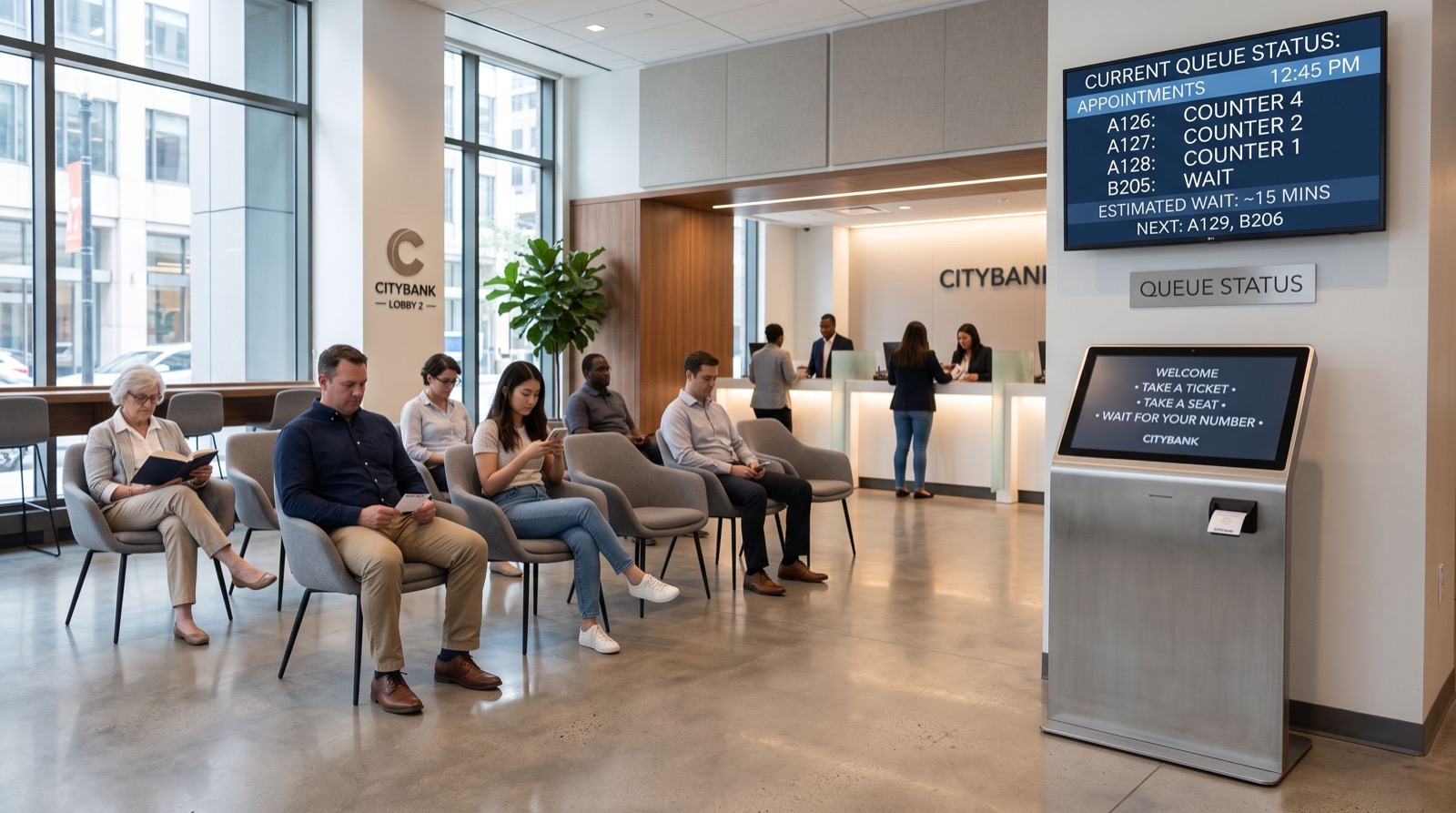
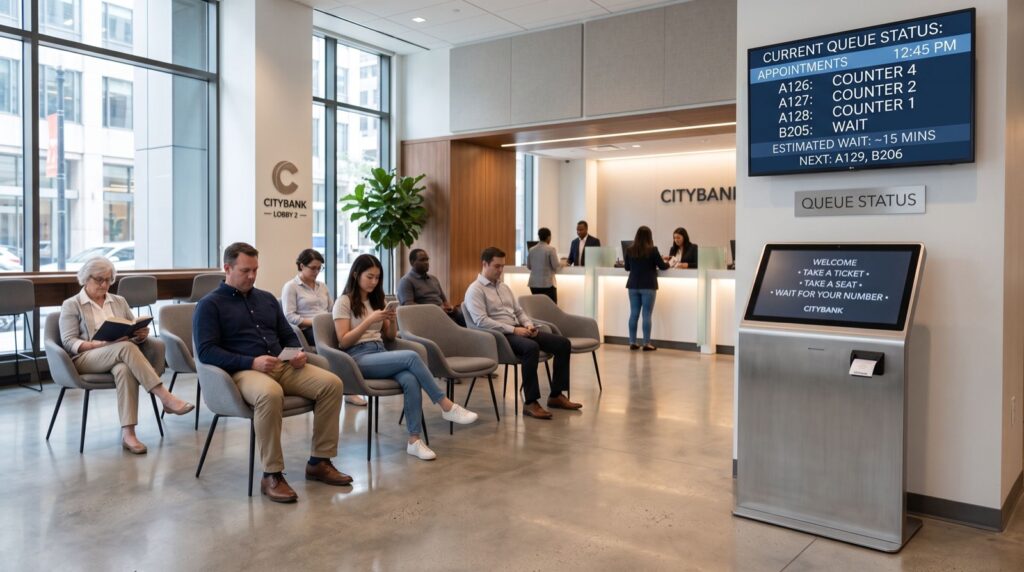
A queue management system is a combination of hardware and software that organizes how visitors wait for and receive service. Instead of a single physical line, customers take a virtual ticket, wait comfortably, and get called to the correct counter when an agent becomes free.
The core idea is simple: replace guesswork with data. The system knows how many people are waiting, which services they need, and how long each transaction takes. Managers finally see what was previously invisible.
Core Components
- Ticket kiosk or mobile check-in: where the customer selects a service and joins the queue.
- Digital signage: screens that display the current ticket number and counter.
- Counter software: the agent dashboard for calling, transferring, and completing visits.
- Analytics engine: the reporting layer that tracks wait time, service time, and staff performance.
Why Queue Management Matters in 2026
Customer patience keeps shrinking. Industry research consistently shows that long waits are one of the top reasons people abandon a service counter and switch providers. A well-run queue directly protects revenue and loyalty.
Beyond the front desk, queuing data feeds workforce planning. If your busiest hour is always 11 a.m., you can schedule extra agents instead of guessing. This is where a professional queue management system in saudi arabia proves its worth, especially in high-traffic government and banking environments across the Gulf.
For businesses expanding across Pakistan, the same logic applies. A tailored queue management system in lahore helps retail outlets, hospitals, and service centers standardize their customer flow across multiple branches.
Types of Queue Management Systems
Not every business needs the same solution. Understanding the categories helps you avoid overspending or under-buying.
| Type | Best For | Key Benefit |
|---|---|---|
| Linear (single line) | Small shops, pharmacies | Low cost, easy setup |
| Structured (ticketing) | Banks, telecom stores | Fair, first-come order |
| Virtual / mobile | Clinics, dealerships | Wait anywhere via phone |
| Appointment-based | Government offices | Predictable scheduling |
Key Features to Look For
When comparing vendors in 2026, focus on features that deliver measurable outcomes rather than flashy add-ons you will never use.
- Multi-service routing: send each customer to the counter that handles their exact request.
- Real-time dashboards: managers watch live wait times and step in before bottlenecks form.
- SMS and WhatsApp alerts: customers leave the building and return when their turn is near.
- Multilingual displays: essential for the Gulf and South Asia where diverse populations mix.
- Feedback capture: a quick rating at the counter closes the experience loop.
Integration With Existing Systems
The best platforms connect to your CRM, ERP, or appointment tools through open APIs. This avoids double data entry and lets you tie a specific customer to their full service history. According to guidance from the U.S. National Institute of Standards and Technology, interoperable systems reduce operational errors and improve service consistency, a principle that applies directly to customer-facing queue platforms.
Measuring the Return on Investment
A queue system pays for itself when you track the right numbers. Start with three baseline metrics before installation, then compare after 90 days.
- Average wait time: the single most visible customer complaint.
- Service time per transaction: reveals training gaps and process friction.
- Abandonment rate: how many people leave before being served.
One original insight from years of deployment work: the biggest gains rarely come from faster staff. They come from smarter routing. When customers reach the right counter the first time, service time drops without adding a single employee. Pairing your queue platform with dependable specialists for installation and training ensures the technology actually delivers on that promise.
Common Mistakes to Avoid
Even great technology fails when it is deployed carelessly. Over years of watching businesses adopt queuing platforms, the same avoidable errors keep appearing. Steer clear of these and your rollout will run far more smoothly.
- Buying more than you need: a small clinic rarely needs an enterprise appointment engine. Match the tier to your actual traffic and grow later.
- Ignoring staff input: agents know where the friction lives. Involve them early and they will champion the system instead of resisting it.
- Skipping the pilot: launching everywhere at once multiplies small problems into big ones. A single-branch trial catches issues cheaply.
- Neglecting the analytics: the reports are the real prize. Businesses that never open the dashboard leave most of the value on the table.
- Poor signage: if customers cannot tell where to check in or where to look for their number, the smoothest software still feels chaotic.
Industries That Benefit Most
While almost any service business gains from organized queuing, a few sectors see outsized returns. Understanding where the technology shines helps you benchmark your own expectations.
Banks and financial institutions use queuing to separate quick transactions from complex advisory visits, keeping simple errands fast. Healthcare providers rely on virtual queues to reduce crowded waiting rooms and protect patient comfort. Telecom retailers manage device sales, SIM registrations, and support in a single fair line. Government service centers, often the busiest of all, use appointment-based queuing to smooth demand across the day.
The common thread is high visitor volume with varied needs. Wherever customers arrive for different services and expect fairness, a structured queue delivers measurable relief. In 2026, even mid-sized businesses in these sectors treat queuing as core infrastructure rather than an optional upgrade.
Frequently Asked Questions
How much does a queue management system cost?
Entry-level ticketing setups start affordably for a single counter, while enterprise platforms with mobile check-in and analytics scale with the number of branches and counters. Most vendors price by counter and by feature tier, so you only pay for what you use.
Can a queue system reduce staffing costs?
Yes, indirectly. By showing your true peak hours, it lets you schedule staff precisely instead of overstaffing quiet periods. Smart routing also lets existing agents serve more customers per hour.
Is a virtual queue better than a physical ticket line?
For many businesses in 2026, yes. Virtual queues let customers wait remotely and reduce crowding, which is especially valuable in healthcare and government settings. However, physical ticketing still works well for walk-in retail.
How long does installation take?
A single-branch system can be live within days, while a multi-site rollout may take a few weeks including staff training and integration with existing software.
Conclusion
A well-chosen queue management system transforms one of the most stressful parts of the customer journey into a smooth, measurable process. In 2026, with customer expectations higher than ever, organized queuing is a genuine competitive advantage rather than a back-office detail. Evaluate your service flow, pick features that match real needs, and partner with experienced installers to get the most from your investment.