Concrete is built to last, sometimes for decades, but eventually most concrete reaches the end of its useful life. Old sidewalks crack and shift, driveways crumble, patios settle unevenly, and slabs need to come up to make way for new construction. When that happens, the job calls for concrete breaking, the controlled process of removing hardened concrete so the area can be cleared, replaced, or repurposed.
This article explores what Concrete Breaking Detroit really involves, the methods used, common situations that call for it, and why proper breaking technique makes such a big difference in the final outcome.
What Is Concrete Breaking?
Concrete breaking is the process of physically breaking up concrete structures, slabs, sidewalks, driveways, patios, foundations, and similar elements, into manageable pieces for removal. Unlike concrete cutting, which produces clean, precise cuts, breaking focuses on demolishing the entire concrete element.
It’s the right approach when concrete needs to be fully removed rather than modified. Sidewalk replacement, driveway removal, patio demolition, and foundation removal all rely on concrete breaking.
When Concrete Breaking Is Needed
There are plenty of situations where breaking concrete becomes the right call.
Damaged sidewalks. Cracked, sunken, or heaved sidewalks become tripping hazards. Many cities require property owners to maintain adjacent sidewalks, and damaged sections often need to be broken out and replaced.
Old driveways. Driveways crack, settle, and develop surface damage over time. When repair is no longer practical, removal is necessary before pouring a new driveway.
Patio replacement. Outdoor patios eventually wear down, especially in regions with freeze-thaw cycles. Breaking out an old patio creates a clean slate for new outdoor living spaces.
Foundation modifications. Renovations, additions, or major repairs sometimes require removing sections of foundation or basement floors.
New construction prep. When new structures are being built on existing concrete surfaces, the old concrete typically has to come out first.
Trip hazard correction. Even small uneven areas can become liability issues. Sometimes the only solution is breaking and replacing the affected section.
Drainage and grading changes. When water doesn’t drain properly, removing and replacing concrete may be part of the solution.
Utility access. Buried utilities sometimes need access for repairs or upgrades, which means cutting through and breaking up the concrete above them.
Why Cracks and Damage Happen in the First Place
Understanding why concrete fails helps make sense of why breaking is sometimes the best option. Concrete is durable but not indestructible, and several factors cause damage over time.
Freeze-thaw cycles. Water seeps into small cracks, freezes, expands, and widens the cracks. Repeated cycles, especially in climates with cold winters, cause significant damage.
Soil movement. The ground beneath concrete shifts due to moisture changes, tree roots, settling, or erosion. This movement creates voids under the slab, leading to cracking and sinking.
Heavy loads. Driveways and commercial slabs that bear heavier loads than they were designed for can crack and break over time.
Tree roots. Roots growing under or alongside concrete can lift, crack, and displace it.
Improper installation. Concrete that wasn’t poured with adequate reinforcement, proper drainage, or correct thickness is more likely to fail.
Age. All concrete has a service life. Even well-installed concrete eventually wears out, especially decorative or thin surface treatments.
Common Concrete Breaking Methods
There are several techniques used to break concrete, each suited to different situations.
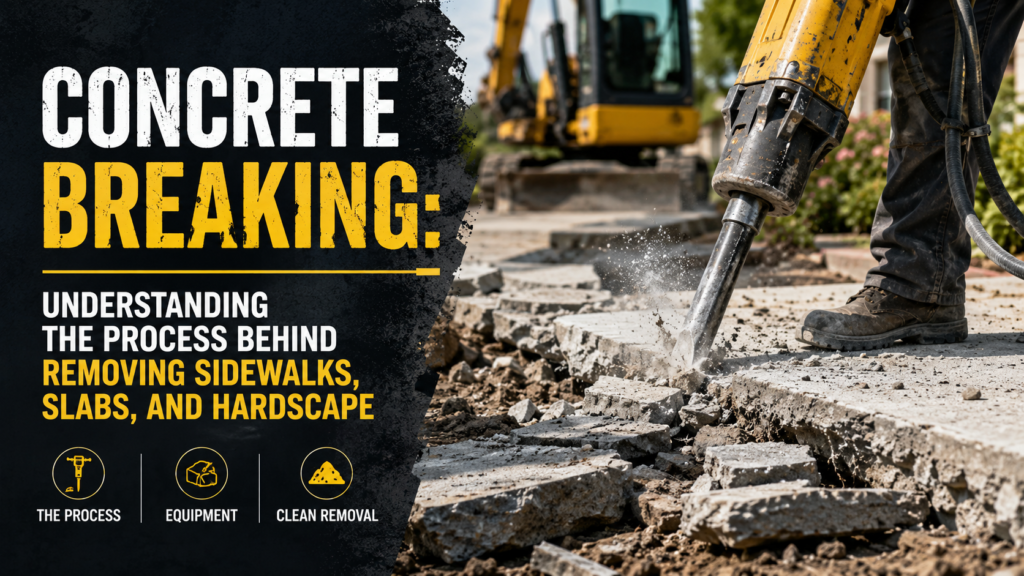
Jackhammers. The classic tool for concrete breaking. Electric or pneumatic jackhammers deliver rapid impacts that break concrete into manageable pieces. They’re ideal for sidewalks, patios, and other moderate-thickness slabs.
Hydraulic breakers. Larger breakers mounted on excavators or skid steers handle bigger jobs efficiently. They’re used for driveways, large slabs, and commercial removal projects.
Sledgehammers and pry bars. For small areas and thin concrete, manual breaking with sledgehammers and pry bars is sometimes practical. It’s slow, labor-intensive work but doesn’t require large equipment.
Concrete saw plus breaker combination. Often the best approach for larger projects: saws cut the slab into sections, and breakers reduce each section to manageable pieces.
Expansive grout. A non-impact method that uses a chemical compound poured into drilled holes. As the grout expands, it fractures the concrete from within. It’s slower but quieter and produces less vibration.
Heavy machinery. For major demolitions, large machines like skid steers, excavators, and even wrecking equipment make quick work of large concrete elements.
The Concrete Breaking Process
A typical concrete breaking project starts with assessment and planning. Crews evaluate the size, thickness, and condition of the concrete, identify any embedded utilities or reinforcement, and plan the work zone for safety.
Before breaking begins, calling for utility locates is critical. Buried lines under driveways, sidewalks, and slabs can be expensive and dangerous to hit. Once the area is cleared, breaking begins systematically, often starting at edges and working inward to maintain control.
Broken pieces are gathered, loaded into trucks or dumpsters, and hauled away for disposal or recycling. Concrete is one of the most recyclable construction materials. Crushed concrete is used as aggregate for roads, new construction, drainage layers, and similar applications.
After the breaking is complete, the underlying ground is typically prepared for whatever comes next, whether that’s new concrete, asphalt, pavers, landscaping, or grading.
Safety Considerations
Concrete breaking generates significant hazards that need to be managed carefully. Flying debris, dust, noise, equipment vibration, and the weight of broken concrete pieces all create risks.
Protective equipment is essential, including safety glasses, hearing protection, gloves, dust masks or respirators, and steel-toed boots. Properly cordoning off the work area protects bystanders and nearby property.
Dust control matters too. Silica dust from concrete is a real health hazard with long-term exposure. Wet methods, vacuum attachments, and proper ventilation reduce dust exposure for workers.
Embedded utilities are another major concern. Underground gas, water, electrical, and communication lines may be just inches below the slab. Always identifying these before breaking prevents serious accidents.
What Happens to the Removed Concrete?
Old concrete doesn’t have to go to a landfill. In fact, concrete is one of the most successfully recycled construction materials. Crushed concrete can be used as aggregate for road bases, fill material, drainage layers, and even new concrete production. Many regions have facilities specifically dedicated to processing concrete debris.
This recycling reduces landfill waste, lowers the demand for newly mined aggregate, and supports sustainable construction practices. Property owners and contractors who choose responsible disposal contribute to these environmental benefits.
Common Questions About Concrete Breaking
How thick of concrete can be broken? It depends on the equipment. Jackhammers handle most sidewalks and patios easily. Larger hydraulic breakers tackle thicker driveways and foundations. Specialized equipment can handle very thick or heavily reinforced concrete.
Does breaking cause damage to surrounding areas? Properly performed breaking is controlled and focused. Skilled crews work in a way that minimizes vibration and impact on nearby structures.
How loud is concrete breaking? Quite loud, especially with jackhammers and large equipment. Hearing protection is essential for workers, and surrounding occupants are often notified in advance.
Is concrete breaking dusty? Yes, especially with dry methods. Wet techniques and dust suppression help control airborne particles.
Can I break concrete myself? Small, thin slabs may be manageable for a determined homeowner with the right equipment and safety gear. Anything thicker, reinforced, or near utilities is best left to professionals.
Why Detroit Properties Often Need Concrete Breaking
Detroit’s climate, with its cold winters and freeze-thaw cycles, takes a toll on concrete over time. Aging sidewalks, cracked driveways, deteriorating patios, and changing property needs all create ongoing demand for concrete removal services. Professional Concrete Breaking Detroit services help property owners and contractors handle these projects efficiently, with the right equipment, proper safety practices, and responsible disposal that supports the region’s recycling infrastructure.
Final Word
Concrete breaking is one of those services that quietly enables progress. Without it, old concrete would sit forever, blocking new construction, creating hazards, and limiting what property owners could do with their land. With it, sidewalks get replaced, driveways get renewed, patios get rebuilt, and projects move forward.
The work itself is straightforward in concept but demanding in execution. It takes the right equipment, careful planning, attention to safety, and a commitment to responsible disposal. Done well, concrete breaking is fast, controlled, and sets the stage for whatever comes next.
For any property owner looking at aging concrete that no longer serves its purpose, understanding the basics of breaking helps make better decisions about timing, methods, and expectations. Old concrete doesn’t have to be a permanent feature of your property, and removing it the right way opens the door to all kinds of new possibilities.
Concrete is built to last, sometimes for decades, but eventually most concrete reaches the end of its useful life. Old sidewalks crack and shift, driveways crumble, patios settle unevenly, and slabs need to come up to make way for new construction. When that happens, the job calls for concrete breaking, the controlled process of removing hardened concrete so the area can be cleared, replaced, or repurposed.
This article explores what concrete breaking really involves, the methods used, common situations that call for it, and why proper breaking technique makes such a big difference in the final outcome.
What Is Concrete Breaking?
Concrete breaking is the process of physically breaking up concrete structures, slabs, sidewalks, driveways, patios, foundations, and similar elements, into manageable pieces for removal. Unlike concrete cutting, which produces clean, precise cuts, breaking focuses on demolishing the entire concrete element.
It’s the right approach when concrete needs to be fully removed rather than modified. Sidewalk replacement, driveway removal, patio demolition, and foundation removal all rely on concrete breaking.
When Concrete Breaking Is Needed
There are plenty of situations where breaking concrete becomes the right call.
Damaged sidewalks. Cracked, sunken, or heaved sidewalks become tripping hazards. Many cities require property owners to maintain adjacent sidewalks, and damaged sections often need to be broken out and replaced.
Old driveways. Driveways crack, settle, and develop surface damage over time. When repair is no longer practical, removal is necessary before pouring a new driveway.
Patio replacement. Outdoor patios eventually wear down, especially in regions with freeze-thaw cycles. Breaking out an old patio creates a clean slate for new outdoor living spaces.
Foundation modifications. Renovations, additions, or major repairs sometimes require removing sections of foundation or basement floors.
New construction prep. When new structures are being built on existing concrete surfaces, the old concrete typically has to come out first.
Trip hazard correction. Even small uneven areas can become liability issues. Sometimes the only solution is breaking and replacing the affected section.
Drainage and grading changes. When water doesn’t drain properly, removing and replacing concrete may be part of the solution.
Utility access. Buried utilities sometimes need access for repairs or upgrades, which means cutting through and breaking up the concrete above them.
Why Cracks and Damage Happen in the First Place
Understanding why concrete fails helps make sense of why breaking is sometimes the best option. Concrete is durable but not indestructible, and several factors cause damage over time.
Freeze-thaw cycles. Water seeps into small cracks, freezes, expands, and widens the cracks. Repeated cycles, especially in climates with cold winters, cause significant damage.
Soil movement. The ground beneath concrete shifts due to moisture changes, tree roots, settling, or erosion. This movement creates voids under the slab, leading to cracking and sinking.
Heavy loads. Driveways and commercial slabs that bear heavier loads than they were designed for can crack and break over time.
Tree roots. Roots growing under or alongside concrete can lift, crack, and displace it.
Improper installation. Concrete that wasn’t poured with adequate reinforcement, proper drainage, or correct thickness is more likely to fail.
Age. All concrete has a service life. Even well-installed concrete eventually wears out, especially decorative or thin surface treatments.
Common Concrete Breaking Methods
There are several techniques used to break concrete, each suited to different situations.
Jackhammers. The classic tool for concrete breaking. Electric or pneumatic jackhammers deliver rapid impacts that break concrete into manageable pieces. They’re ideal for sidewalks, patios, and other moderate-thickness slabs.
Hydraulic breakers. Larger breakers mounted on excavators or skid steers handle bigger jobs efficiently. They’re used for driveways, large slabs, and commercial removal projects.
Sledgehammers and pry bars. For small areas and thin concrete, manual breaking with sledgehammers and pry bars is sometimes practical. It’s slow, labor-intensive work but doesn’t require large equipment.
Concrete saw plus breaker combination. Often the best approach for larger projects: saws cut the slab into sections, and breakers reduce each section to manageable pieces.
Expansive grout. A non-impact method that uses a chemical compound poured into drilled holes. As the grout expands, it fractures the concrete from within. It’s slower but quieter and produces less vibration.
Heavy machinery. For major demolitions, large machines like skid steers, excavators, and even wrecking equipment make quick work of large concrete elements.
The Concrete Breaking Process
A typical concrete breaking project starts with assessment and planning. Crews evaluate the size, thickness, and condition of the concrete, identify any embedded utilities or reinforcement, and plan the work zone for safety.
Before breaking begins, calling for utility locates is critical. Buried lines under driveways, sidewalks, and slabs can be expensive and dangerous to hit. Once the area is cleared, breaking begins systematically, often starting at edges and working inward to maintain control.
Broken pieces are gathered, loaded into trucks or dumpsters, and hauled away for disposal or recycling. Concrete is one of the most recyclable construction materials. Crushed concrete is used as aggregate for roads, new construction, drainage layers, and similar applications.
After the breaking is complete, the underlying ground is typically prepared for whatever comes next, whether that’s new concrete, asphalt, pavers, landscaping, or grading.
Safety Considerations
Concrete breaking generates significant hazards that need to be managed carefully. Flying debris, dust, noise, equipment vibration, and the weight of broken concrete pieces all create risks.
Protective equipment is essential, including safety glasses, hearing protection, gloves, dust masks or respirators, and steel-toed boots. Properly cordoning off the work area protects bystanders and nearby property.
Dust control matters too. Silica dust from concrete is a real health hazard with long-term exposure. Wet methods, vacuum attachments, and proper ventilation reduce dust exposure for workers.
Embedded utilities are another major concern. Underground gas, water, electrical, and communication lines may be just inches below the slab. Always identifying these before breaking prevents serious accidents.
What Happens to the Removed Concrete?
Old concrete doesn’t have to go to a landfill. In fact, concrete is one of the most successfully recycled construction materials. Crushed concrete can be used as aggregate for road bases, fill material, drainage layers, and even new concrete production. Many regions have facilities specifically dedicated to processing concrete debris.
This recycling reduces landfill waste, lowers the demand for newly mined aggregate, and supports sustainable construction practices. Property owners and contractors who choose responsible disposal contribute to these environmental benefits.
Common Questions About Concrete Breaking
How thick of concrete can be broken? It depends on the equipment. Jackhammers handle most sidewalks and patios easily. Larger hydraulic breakers tackle thicker driveways and foundations. Specialized equipment can handle very thick or heavily reinforced concrete.
Does breaking cause damage to surrounding areas? Properly performed breaking is controlled and focused. Skilled crews work in a way that minimizes vibration and impact on nearby structures.
How loud is concrete breaking? Quite loud, especially with jackhammers and large equipment. Hearing protection is essential for workers, and surrounding occupants are often notified in advance.
Is concrete breaking dusty? Yes, especially with dry methods. Wet techniques and dust suppression help control airborne particles.
Can I break concrete myself? Small, thin slabs may be manageable for a determined homeowner with the right equipment and safety gear. Anything thicker, reinforced, or near utilities is best left to professionals.
Why Detroit Properties Often Need Concrete Breaking
Detroit’s climate, with its cold winters and freeze-thaw cycles, takes a toll on concrete over time. Aging sidewalks, cracked driveways, deteriorating patios, and changing property needs all create ongoing demand for concrete removal services. Professional Concrete Breaking Detroit services help property owners and contractors handle these projects efficiently, with the right equipment, proper safety practices, and responsible disposal that supports the region’s recycling infrastructure.
Final Word
Concrete breaking is one of those services that quietly enables progress. Without it, old concrete would sit forever, blocking new construction, creating hazards, and limiting what property owners could do with their land. With it, sidewalks get replaced, driveways get renewed, patios get rebuilt, and projects move forward.
The work itself is straightforward in concept but demanding in execution. It takes the right equipment, careful planning, attention to safety, and a commitment to responsible disposal. Done well, concrete breaking is fast, controlled, and sets the stage for whatever comes next.
For any property owner looking at aging concrete that no longer serves its purpose, understanding the basics of breaking helps make better decisions about timing, methods, and expectations. Old concrete doesn’t have to be a permanent feature of your property, and removing it the right way opens the door to all kinds of new possibilities.